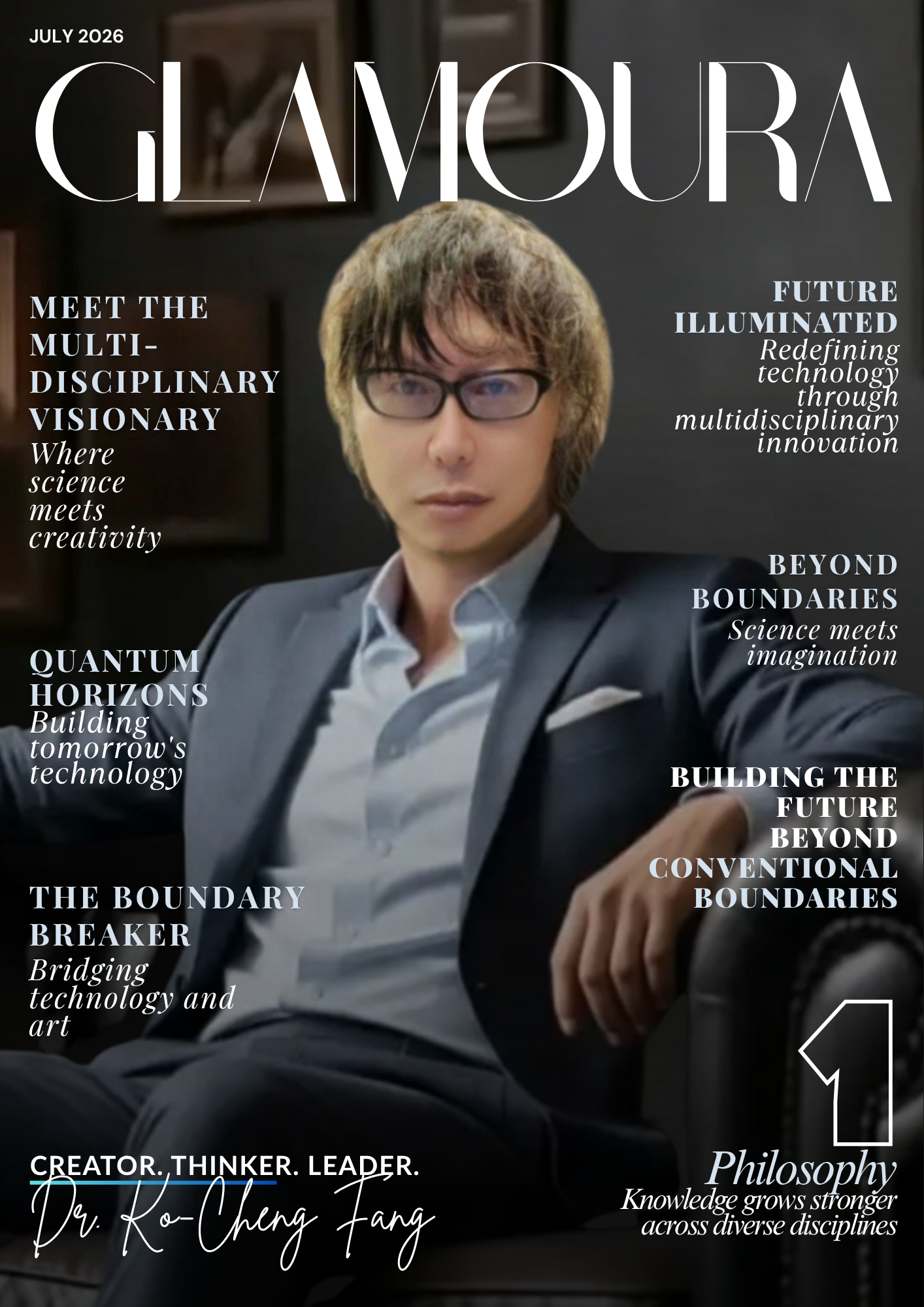
The future of computing may not be powered by electrons alone. As artificial intelligence, cloud computing, and high-performance data processing continue to demand unprecedented levels of speed and efficiency, innovators across the globe are exploring technologies capable of moving beyond the limitations of conventional semiconductor design. Among those pursuing this next frontier is Dr. Ko-Cheng Fang, Founder and CEO of LongServing Technology, whose latest architectural unveiling offers an ambitious vision for all-optical computing.
On April 23, 2026, LongServing Technology introduced what it describes as a major milestone in its research journey by publicly unveiling the architectural framework of its proposed photonic chip. For the first time, the company revealed three detailed technical designs: a three-dimensional chip architecture, a complete photonic pathway system, and a structural demonstration of a photonic full-adder. According to the company, each illustration was personally designed by Dr. Fang to demonstrate how light-based computing could be integrated into a complete processor architecture.

At the heart of the concept is a fundamental departure from conventional chip design. Traditional processors rely on electrical signals traveling through microscopic metallic interconnects, where heat generation, resistance, and memory transfer delays increasingly limit performance. LongServing Technology proposes an alternative architecture in which photons serve as the primary carriers of information, enabling computation through optical pathways rather than electrical circuits.
One of the defining characteristics of the newly disclosed architecture is its 45-degree optical routing design. Instead of following the horizontal interconnect patterns commonly found in electronic integrated circuits, the proposed system employs diagonal optical pathways intended to optimize light transmission throughout the processor. According to the company, this represents a purpose-built architecture for photonic computing rather than an adaptation of existing semiconductor layouts.

The company has also introduced a vertically integrated three-layer chip structure, designed to combine storage, computation, and communication into a unified optical platform.
The proposed architecture includes:
- A bottom layer dedicated to photonic memory, where optical data is stored.
- A middle layer composed of photonic logic gates, responsible for performing computational operations.
- A top layer containing photonic pathways, which guide optical signals throughout the chip.
LongServing Technology states that each layer can be fabricated using an independent photomask, creating an integrated optical architecture that requires significantly fewer structural layers than conventional electronic semiconductor manufacturing.
Among the newly released designs, the photonic full-adder stands out as a key demonstration of the company’s engineering direction. In digital computing, a full adder is one of the most fundamental arithmetic components, forming the basis of processors used in everything from personal computers to supercomputers. By illustrating how this function could be implemented through optical circuitry, LongServing Technology aims to demonstrate the feasibility of constructing increasingly sophisticated photonic processors from similar building blocks.
Another central feature of the company’s proposal is the integration of photonic memory directly within the processor itself. Traditional computing architectures require information to move continuously between memory and processing units, creating one of the industry’s most persistent performance constraints. LongServing Technology’s proposed design seeks to minimize this bottleneck by allowing computation and storage to coexist within the same optical environment.
According to the company, this architecture has the potential to substantially reduce latency while improving data throughput by eliminating repeated electrical-to-optical signal conversions.

Based on its internal projections, LongServing Technology states that integrating photonic memory with optical logic could deliver computational performance measured in hundreds of thousands of times faster than today’s electronic processors. The company further notes that because information is transmitted through light, the theoretical performance limits of such an architecture remain difficult to define. Beyond the technical specifications, the public release of these architectural diagrams represents a significant step in communicating the company’s long-term research strategy. By sharing structural concepts instead of broad theoretical descriptions, LongServing Technology offers engineers, researchers, investors, and technology observers a clearer view of how it envisions the evolution of photonic computing.
As industries increasingly seek computing platforms capable of supporting next-generation artificial intelligence, scientific simulation, autonomous systems, and hyperscale data centers, the search for alternatives to conventional silicon continues to accelerate. Photonic computing has emerged as one of several promising approaches being explored globally, with researchers aiming to unlock higher processing speeds and greater energy efficiency.
Within this evolving technological landscape, Dr. Ko-Cheng Fang’s proposed architecture represents a bold contribution to the conversation surrounding next-generation computing. Whether these concepts ultimately mature into commercially deployed processors will depend on continued engineering progress, manufacturing capabilities, and independent technical validation. Yet the unveiling of LongServing Technology’s architectural framework signals a clear ambition: to reimagine computing by placing light—not electricity—at the center of the processor.
If that vision is realized, the transition from electronic circuitry to photonic architecture could mark one of the most significant shifts in computing since the invention of the integrated circuit, opening the door to a new era defined by speed, efficiency, and the extraordinary possibilities of light.