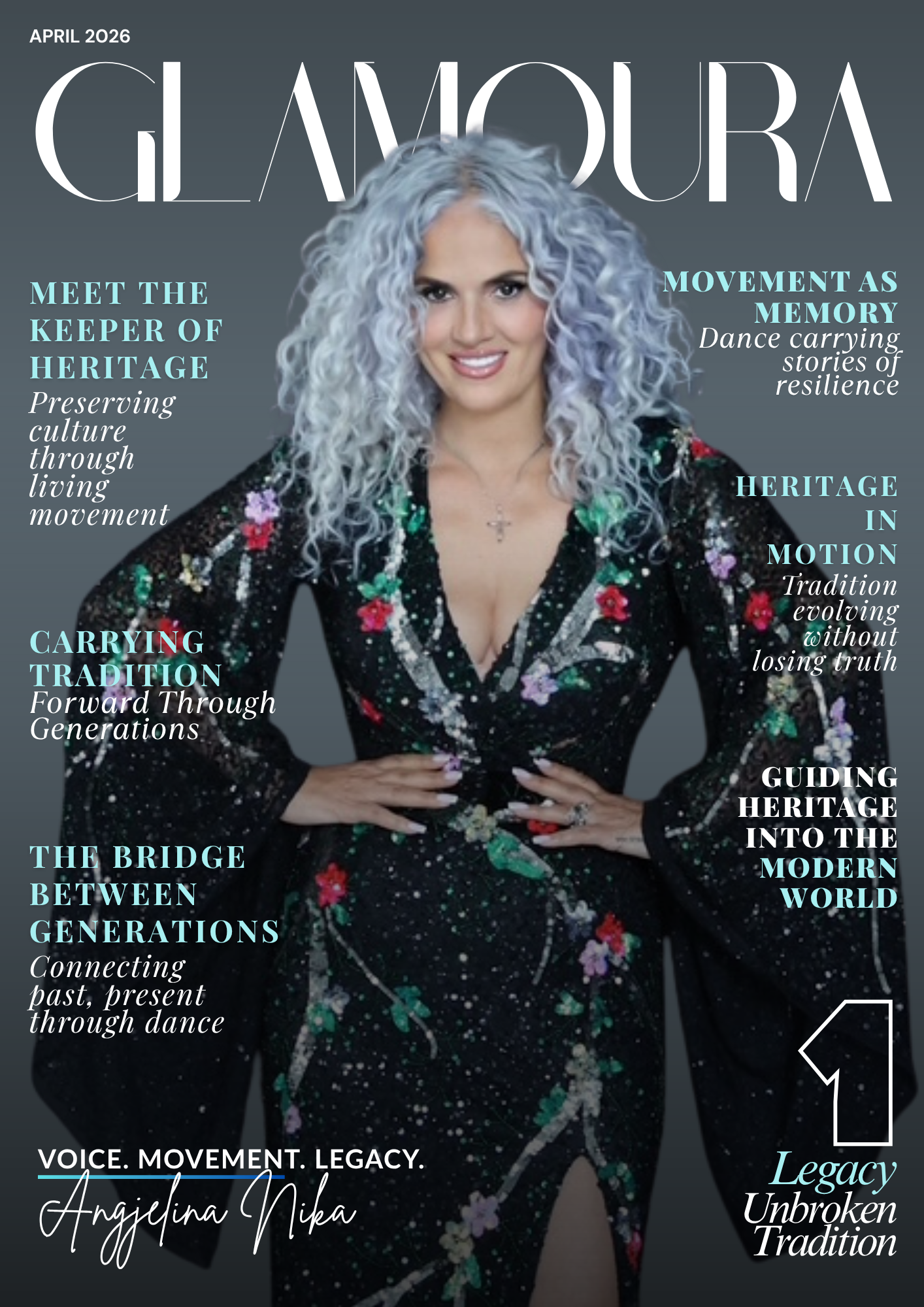
In a world that moves faster each day, where trends replace traditions and identity can blur across borders, Angjelina Nika stands firmly rooted in something enduring. Her work in Albanian folk dance is not simply artistic expression—it is preservation, storytelling, and cultural continuity woven into motion. Through choreography, teaching, and leadership, she has become a quiet but powerful force ensuring that heritage is not only remembered, but lived.
For Angjelina, dance was never something distant or ornamental. It was present from the beginning—woven into family life, celebrations, and everyday identity. Albanian folk dance was not introduced to her as a discipline; it was absorbed naturally, like language or memory. From an early age, she understood that each movement carried meaning. These were not just steps, but echoes of generations who had used dance to express resilience, unity, and belonging.
As her connection to dance deepened, so did her sense of responsibility. What began as passion evolved into purpose. Angjelina recognized that tradition survives only when it is actively carried forward. Her work reflects that understanding. She does not treat folk dance as something to preserve in stillness, but as something that must continue to breathe through new generations.
Her choreography is guided by this philosophy. Every piece she creates begins with a question: what does this movement mean? Rather than focusing solely on visual composition, she looks beneath the surface—into the history, struggles, and spirit embedded in each dance. Albanian folk traditions are deeply tied to land, community, and endurance, and Angjelina ensures that these elements remain intact. Her work is not about reinvention for its own sake, but about honoring truth while allowing space for growth.
A pivotal moment in her journey came not on stage, but in the classroom. Teaching young dancers revealed the deeper impact of her work. She watched students connect emotionally with movements that had existed for centuries, forming a bridge between past and present. In those moments, dance became more than performance. It became continuity—an unbroken thread linking generations through shared expression.
This realization reshaped her approach. As both a choreographer and educator, Angjelina began to see herself as a guide between worlds. She preserves tradition with care, but also invites young dancers to find their own voice within it. Her teaching goes beyond technique. She explains the meaning behind each step, the story behind each formation, and the emotion behind each rhythm. In doing so, she empowers dancers to perform with understanding rather than imitation.
Balancing authenticity with creativity is one of the defining aspects of her work. Angjelina believes that tradition is not a limitation, but a framework. She begins with a strong foundation—ensuring that the cultural and historical integrity of a dance is preserved. Only then does she introduce subtle innovation through staging, dynamics, and expression. This approach allows her work to resonate with modern audiences without losing its essence.
Her choreography often unfolds like narrative. Albanian folk dances are inherently storytelling forms, and Angjelina leans into this quality. Each performance becomes a living story—of celebration, struggle, pride, or unity. Movement becomes language, rhythm becomes voice, and the stage transforms into a space where history is not just remembered, but felt.
Central to her work are recurring themes: resilience, unity, identity, and pride. These are not abstract ideas, but lived experiences reflected in movement. Strong, grounded steps evoke endurance. Synchronized formations express collective strength. Upright posture and expressive gestures communicate dignity and pride. Beneath it all lies a deep sense of identity—an understanding of who one is and where one comes from.

As a leader, Angjelina’s strength lies in her approach. She leads not through authority alone, but through knowledge, consistency, and respect for tradition. Her journey has not been without challenges, particularly as a woman in a field shaped by generations of established practices. Yet rather than confronting these barriers with resistance, she met them with preparation and clarity. Her leadership style is grounded in integrity, earning trust through action rather than demand.
Empowering the next generation is at the heart of her mission. She places particular emphasis on supporting young dancers, especially young women, encouraging them to see themselves as carriers of culture rather than passive participants. By teaching the deeper meaning behind the dance, she helps them build confidence rooted in understanding. In her view, true expression comes not from copying movement, but from connecting to it.
Angjelina also recognizes the evolving role of cultural dance in a globalized world. As Albanian folk dance gains visibility beyond its origins, it becomes a bridge between cultures. International audiences may not understand every detail, but they can feel the emotion and narrative embedded in the performance. For Angjelina, this is where dance becomes universal—a language that communicates without translation.
Despite the pace of modern life, she remains confident in the relevance of tradition. Authenticity, she believes, will always resonate. When a performance carries real meaning, it transcends time and trend. It speaks to something deeper—something human.
Recognition has followed her work, but she approaches it with humility. For her, visibility is not the goal, but a responsibility. It is an opportunity to amplify culture, inspire others, and ensure that tradition continues to move forward.
Angjelina Nika’s work is a reminder that heritage is not static. It lives in movement, in teaching, in connection. Through every step she choreographs and every dancer she guides, she carries forward the story of a people—one that continues to unfold, generation by generation.